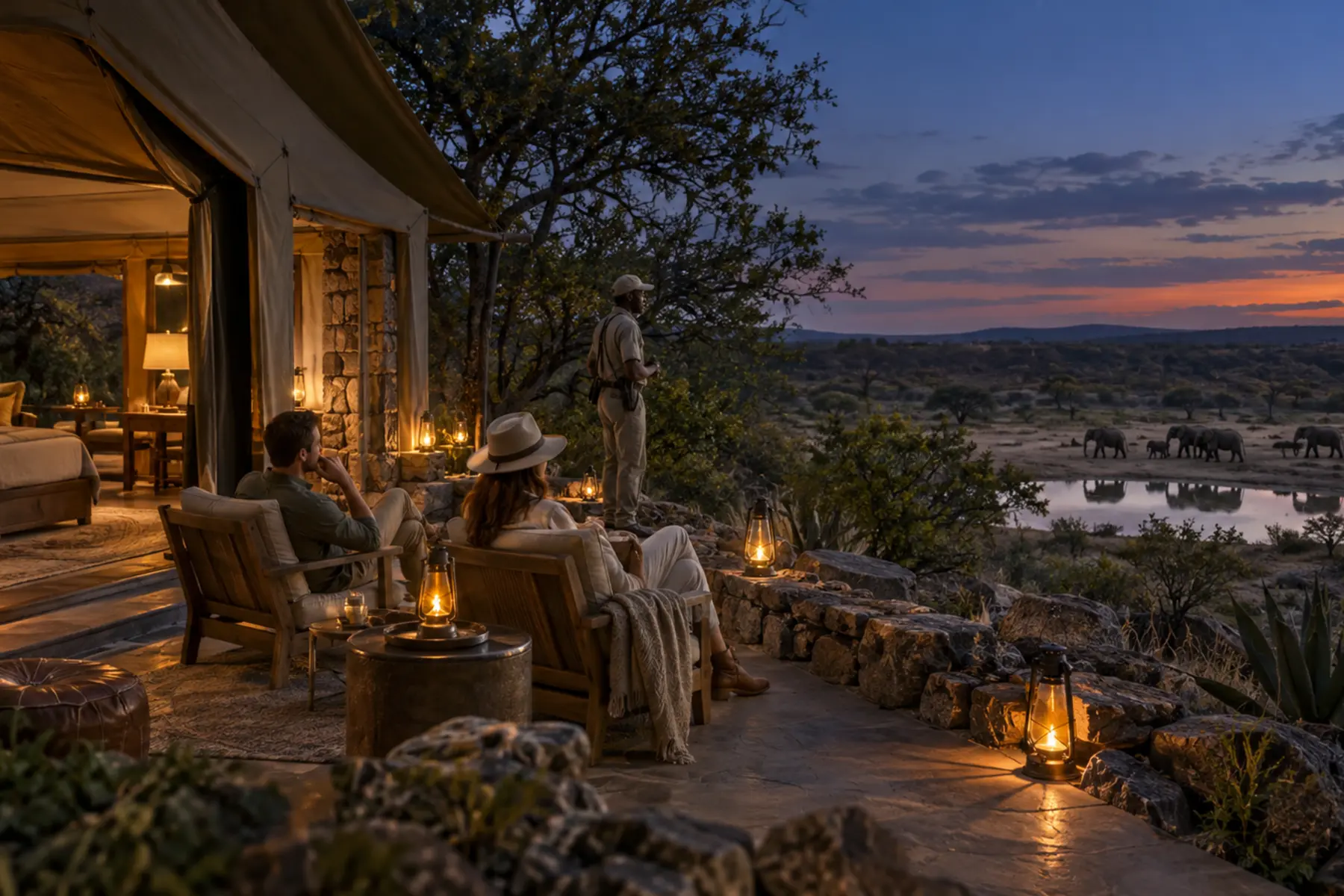
Compare land and water experiences carefully; two beautiful camps can offer similar activities.
THE SHORT VERDICT
Who should consider Botswana?
Travellers who want wilderness and are comfortable with light-aircraft connections.
Landscape and experience
Okavango Delta and Linyanti, with contrasting dry-country regions. Country names are too broad for a useful safari decision; the exact ecosystem and camp position determine the daily experience.
Season before camp
Start with your travel window, wildlife interests and tolerance for heat, rain or busy periods. Natural movements and sightings cannot be guaranteed, so judge an itinerary by its depth rather than one promised spectacle.
Guiding, access and pace
Ask whether drives are private or shared, how many guests use each vehicle, how long transfers take and how many complete safari days remain after moving camps.
The honest watch-out
Water activities depend on camp location and water levels. Flights, baggage allowances and private-concession access affect the plan.
What belongs in the quote
- Internal flights and road transfers
- Park or conservancy fees
- Shared or private guiding and vehicle limits
- Meals, drinks and laundry
- Optional activities and gratuity guidance
Questions worth asking
When is the best time for Botswana?
It depends on the exact region and priority. We use your dates and interests to narrow the answer before choosing camps.
Can wildlife sightings be guaranteed?
No. Responsible planning improves position and time in the field, but wildlife and natural movements remain unpredictable.
How many nights per camp?
Usually enough for at least two full activity days, with longer stays when transfers are demanding or the area is especially varied.
What should I watch?
Water activities depend on camp location and water levels. Flights, baggage allowances and private-concession access affect the plan.
Details, operating policies, fares and inclusions can change. We verify the exact property, ship, itinerary and terms for your dates before you book.